Views: 10 Author: Site Editor Publish Time: 2025-08-12 Origin: Site


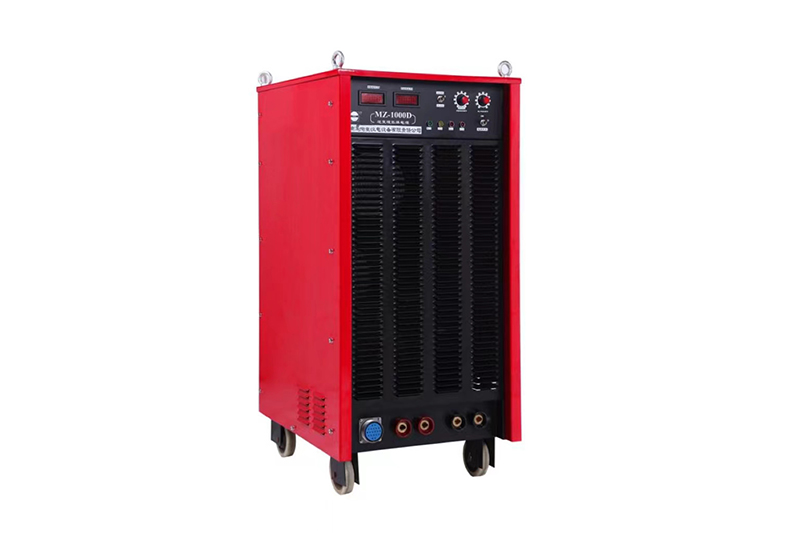
Submerged arc welding (SAW) is also a welding method that uses an electric arc as the heat source. In SAW, the arc burns under a layer of granular fusible flux, and the arc is not exposed—hence the name "submerged arc welding". The metal electrode used is a continuous feed of bare welding wire.
SAW features deep penetration, high productivity, and a high degree of mechanized operation, making it suitable for welding long welds in medium and thick plate structures. It uses a large welding current, which corresponds to a relatively high input power. Combined with the heat insulation effect of the flux and molten slag, it achieves high thermal efficiency and deep penetration. This allows for smaller grooves in the workpiece, reducing the amount of filler metal required. For single-wire SAW, it can penetrate 20mm in one pass even without grooving the workpiece.
The welding speed is high. Taking the butt welding of 8-10mm thick steel plates as an example, the speed of single-wire SAW can reach 50-80 cm/min, while that of shielded metal arc welding (SMAW, manual arc welding) does not exceed 10-13 cm/min.
The presence of flux not only isolates the molten metal from air contact but also slows down the solidification of the molten pool metal. The liquid metal and molten flux have more time for metallurgical reactions, reducing the possibility of defects such as pores and cracks in the weld. Additionally, the flux can supplement some alloying elements to the weld metal, improving the mechanical properties of the weld metal.
When welding in windy environments, SAW provides better protection than other arc welding methods. There is no arc light radiation, resulting in better working conditions. During automatic welding, welding parameters can be maintained stably through automatic adjustment. Compared with manual arc welding, the dependence of welding quality on the welder's skill level is significantly reduced.
The materials that can be welded by SAW have expanded from carbon structural steel to low-alloy structural steel